
01
Early shastric interventions
The character of Maharaj Ji’s early writing was unmistakable: a contemporary question had to be answered from within shastra, reason and the unbroken tradition.
This writing was not rebuttal alone. From sankirtana and Varnashrama maryada to Shankara Siddhanta, synthesis and Bhagavat-tattva, it offered a positive and ordered establishment of siddhanta.
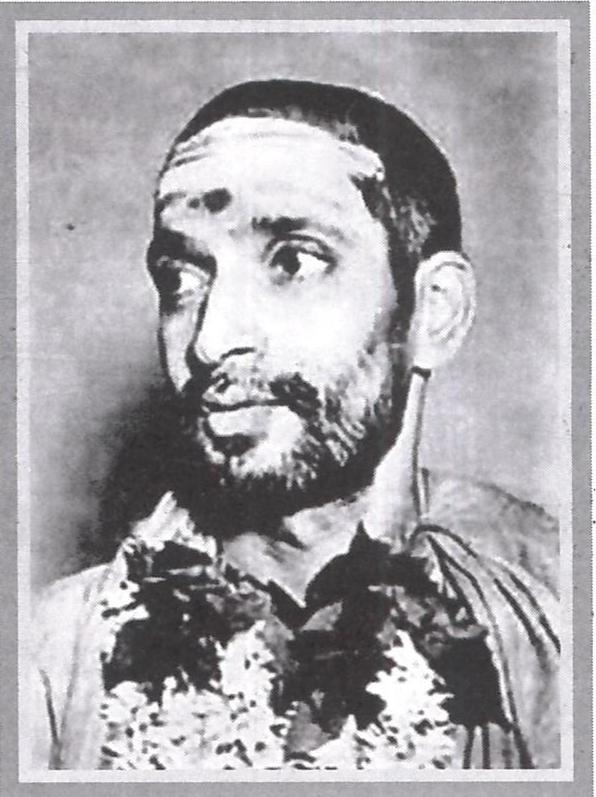
- 011938
Sankirtan Mimamsa evam Varnashrama Maryada
- 021939
Shankar Siddhanton Par Kiye Gaye Akshepon Ka Samadhan
- 031940
Samanvaya Samrajya Sanrakshana
- 041940
Shri Bhagavattattva
02
The nature and authority of the Veda
In his thought, the Veda is not an historical remnant but an eternal pramana and an unbroken tradition of knowledge.
These works cannot be understood as isolated titles. They form stages of a long intellectual sadhana—from the nature and authority of the Veda to the relation between aham and paramartha, and finally to the expansive unfolding of Vedic meaning.
- 011959–60
Ved Ka Svarupa Aur Pramanya
- 021961
Veda Pramanya Mimamsa
- 031962
Ahamartha Aur Paramartha Sara
- 041969
Veda Svarupa Vimarsha
- 05Volume I 1979 · Volume II 1980
Vedartha Parijata
03
Ramayana, Bhakti and Shri Vidya
The shastric and philosophical reading of the Rama tradition, the rasa and tattva of Bhakti, and the worship of Bhagavati Tripurasundari all appear in his literature as dimensions of one Sanatana vision of sadhana.
This range reveals the integrity of his darshana. Vedic inquiry, Advaita, Bhakti, the Ramayana and Shri Vidya are not disconnected topics, but traditions that illuminate one another.
- 01
Bhakti Rasarnava
- 021973
Shri Vidyaratnakara
- 031977 · released in 1979
Ramayana Mimamsa
- 041979
Shri Vidya Varivasya
04
Society, the state and modern ideologies
He examined modern society, law, economy, the state and political ideologies through a shastric Indian lens. He did not turn away from the questions of his time; he placed them before the standards of Dharma, pramana and duty.
To confine these works to the controversies of their age would diminish their importance. They continue to ask what truth and moral responsibility should ground the ordering of the human person, society and governance.
- 01Composed in 1948 · published in 1958
Marxvad Aur Ramrajya
- 021949
Sangharsh Aur Shanti
- 03circa 1949
Hindu Code Bill Praman Ki Kasauti Par
- 041973
Chaturvarnyam Sanskriti Vimarsha
- 051975
Vichara Piyusha
- 061976
Kya Sambhog Se Samadhi Sambhav
05
Sanmarg, Siddhant and public thought
Publishing initiatives begun in 1939 carried shastric thought to a much wider reading public. Developing from monthly and weekly forms into daily publication, this stream became a bridge between his writing, Dharma Sangha and public awakening.
Alongside philosophy and the protection of Dharma, this public tradition continually engaged questions of society, the nation and contemporary life.
- 01from 1939
Sanmarg
- 02from 1939
Siddhant